Notes on order automation
Arguments we can make honestly, from a product we actually built. No borrowed statistics, no invented case studies — and nothing about the benefits of order management, because the internet has enough of those.
What Is Order Processing? A Distributor's Guide to Every Step
Order processing explained for distributors: the steps from order to invoice, the ways orders get processed, where it goes wrong and how to improve it.
Read it — 10 min
How to Automate PDF Orders into QuickBooks
How to automate PDF orders into QuickBooks: turn customer PDF purchase orders, scanned or native, on any template, into QuickBooks transactions.
8 min read
How to Automate Email Orders into QuickBooks
How to automate email orders into QuickBooks: turn order emails, PDF purchase orders and Excel attachments into QuickBooks transactions without retyping.
8 min read
Manual vs AI Order Processing: Time, Cost and Accuracy Compared
Manual vs AI order processing compared honestly on time, cost and accuracy: what people still do better, what software does better, and how to measure it.
9 min read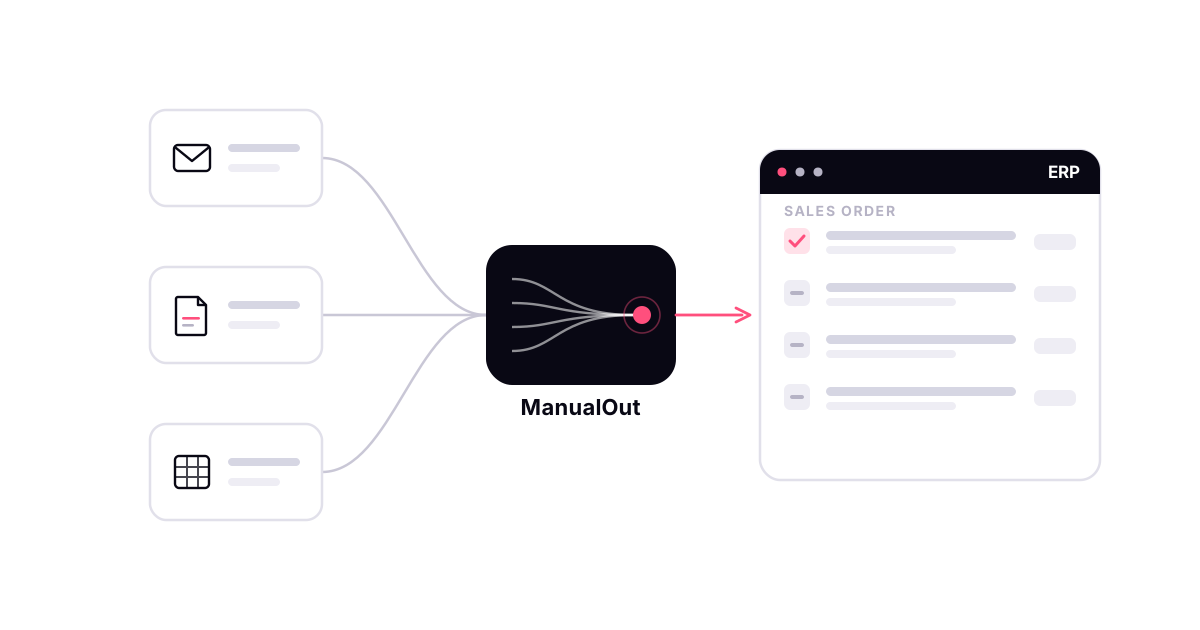
Automated Order Processing for Distributors
A distributor's guide to automated order processing — what to automate first, what stays with your ERP, and how to be honest about the numbers.
8 min read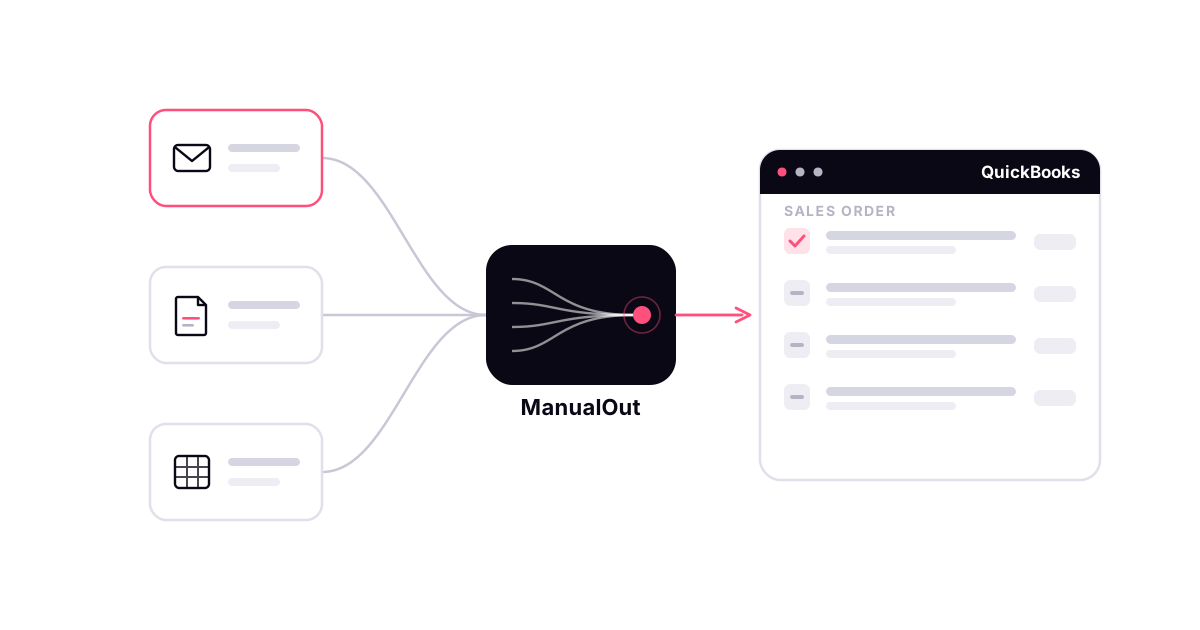
QuickBooks Sales Order Automation for Distributors
QuickBooks sales order automation for distributors: the Online vs Desktop sales-order difference, and how to create sales orders from email, PDF and Excel.
9 min read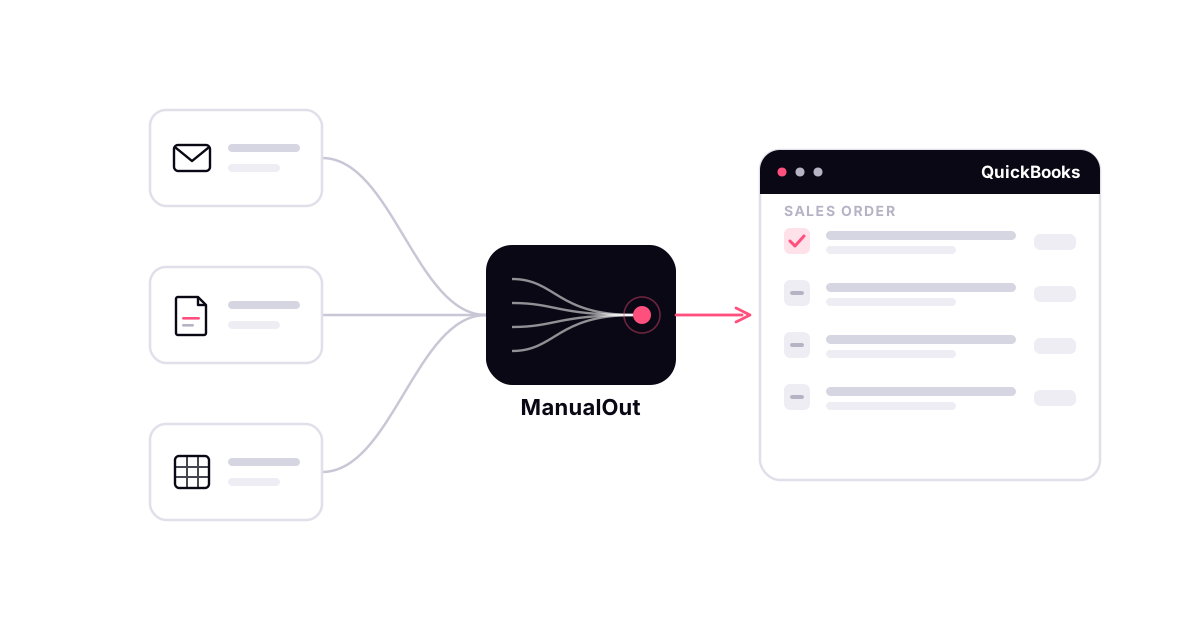
How to Automate Order Entry in QuickBooks (Online and Desktop)
How to automate order entry in QuickBooks Online and Desktop: turn email, PDF and spreadsheet orders into QuickBooks transactions without rekeying them.
7 min read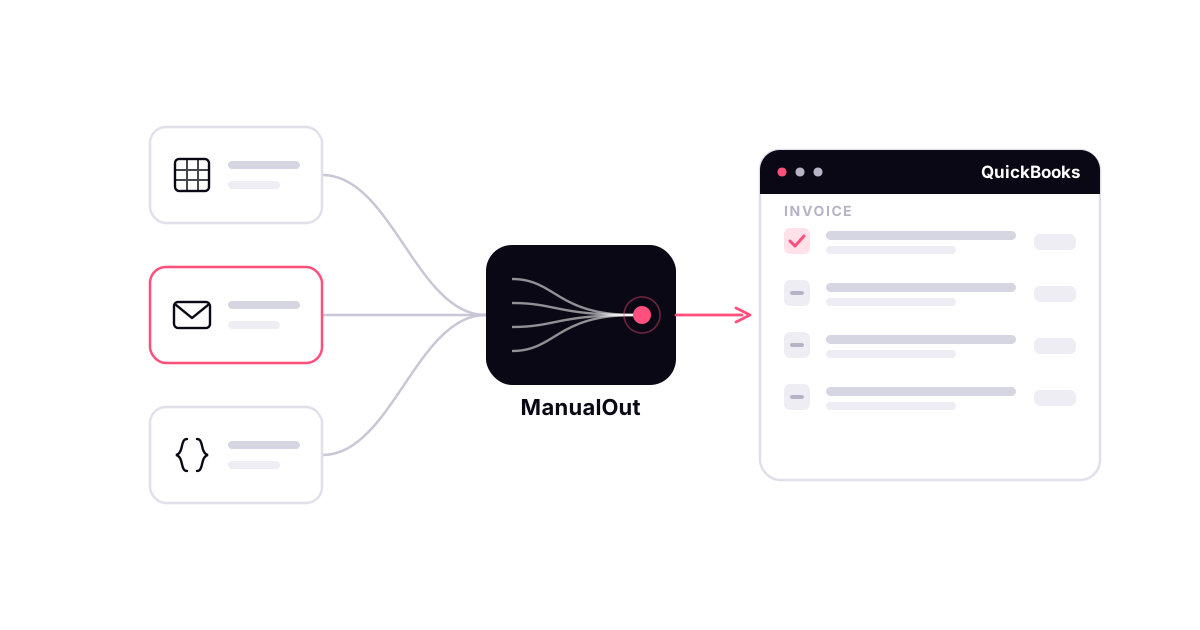
QuickBooks Order Management for Distributors
How distributors run order management on QuickBooks: where it fits, the gaps between Online and Desktop, and how to automate customer order processing.
6 min read
Prophet 21 Order Entry: Every Way to Get Customer Orders into P21
Manual entry, SISM imports, EDI, the P21 API and AI intake: how each gets customer orders into Epicor Prophet 21, what it needs and which orders it fits.
10 min read
Modernise Order Processing Without Forcing Customers to Change
How distributors can automate email, WhatsApp, PDF and spreadsheet orders without forcing customers onto a new portal or a different ordering process.
12 min read
The Hidden Cost of Manual Order Entry in Food Distribution (and Where to Find It)
The costs of manual order entry that never appear under that name — perishable write-offs, redeliveries, missed cutoffs, churn — and where to find them.
9 min read
Will AI Order Entry Work With My ERP?
The honest answer to whether AI order entry connects to your ERP — what integration really means, which systems it covers, and how to find out for sure.
13 min read
EDI vs AI Order Automation: Which Should You Use?
Not a choice. EDI is the right answer for a handful of large accounts and the wrong one for the other few hundred — here is where the line falls and why.
7 min read
What Is AI Order Entry Software? A Guide for Food Distributors
What AI order entry software does for food and FMCG distributors, how it turns email and WhatsApp orders into ERP sales orders, and how to choose it well.
10 min read
Your Order Inbox Is the Order-Entry Bottleneck
Most distributors take most of their orders by email. It is the least discussed channel in this market and the one where the work actually is.
6 min read
How AI Reads a Free-Text Order
From "12 ctn cola 330" to a matched line item: what actually happens between an incoming message and a validated sales order, and where it should stop and ask.
8 min read
Catch Weight Order Entry: Ordered by Piece, Invoiced by Kilo
What catch weight means, how catch-weight products are priced, picked and invoiced, and why it breaks order entry for meat, seafood and cheese distributors.
8 min read
How to Automate WhatsApp Orders Into Your ERP
What it takes to turn WhatsApp messages into ERP sales orders without retyping: the Business API, identifying the account, and handling voice notes and photos.
7 min read
EDI for Distributors Reaches Ten Accounts. Who Reaches 300?
EDI is excellent, and it reaches almost none of your customers. The gap it leaves is where your order desk actually spends its day.
5 min read
Why B2B orders still arrive as messages
Every distributor has tried to move customers onto a portal. Most have quietly given up. Here is why that keeps happening, and what to do instead.
6 min read
Order Cutoff Times Are Only as Real as Your Order Desk
You publish a cutoff. Whether it holds depends on how fast someone can type, which is not a policy — it is a queue.
4 min read
Multi-Channel Order Processing for Distributors
Email, PDF, spreadsheet, WhatsApp, voice. Five channels, one item master, one set of account rules — and only the reading stage should differ between them.
7 min read
Minimum Order Value Enforcement Is a Margin Problem
Most distributors have a minimum order value. In practice it is only as real as the person checking it at 8am.
5 min read
What to ask an order automation vendor
Every vendor in this category demos well on a clean PDF. Here are the questions that separate them — including the ones we would rather you didn't ask us.
7 min read
10 Order Processing Problems in FMCG Distribution
The recurring failures on a food and FMCG order desk — the messy channel mix, the item master, the 6am queue, catch weight — and what each one actually needs.
9 min read
Where Order Processing Time Actually Goes
An order takes four to six minutes. Almost none of it is typing. Breaking the time down by stage explains why faster data entry never fixed the order desk.
6 min read
Order Errors in FMCG Distribution: Causes and Fixes
Most order errors are not typos. They are matching failures, stale rules and ambiguity resolved silently — each with a different fix and a different cost.
7 min read
How FMCG Distributors Automate Manual Order Entry
Manual order entry is five jobs, not one: read, match, price, key in, chase. Automating it means handling each stage — and knowing which still need a person.
8 min read
Why Your Team Still Types Order Emails by Hand
The typing is not a discipline problem or a training gap. It persists because every alternative asked the customer to change, and the customer declined.
6 min read
What Manual Order Entry Really Costs You
Vendors quote $8–$15 per order with no methodology behind it. Here is how to work out your own number from figures you already have, in about ten minutes.
7 min readSee it run on one of your own orders
Send us a real order — the messiest one you can find. We will run it live and show you what happens when it works, and when it does not.