QuickBooks Order Management for Distributors
How distributors run order management on QuickBooks — where it fits, where the gaps are between Online and Desktop, and how to automate customer order processing.
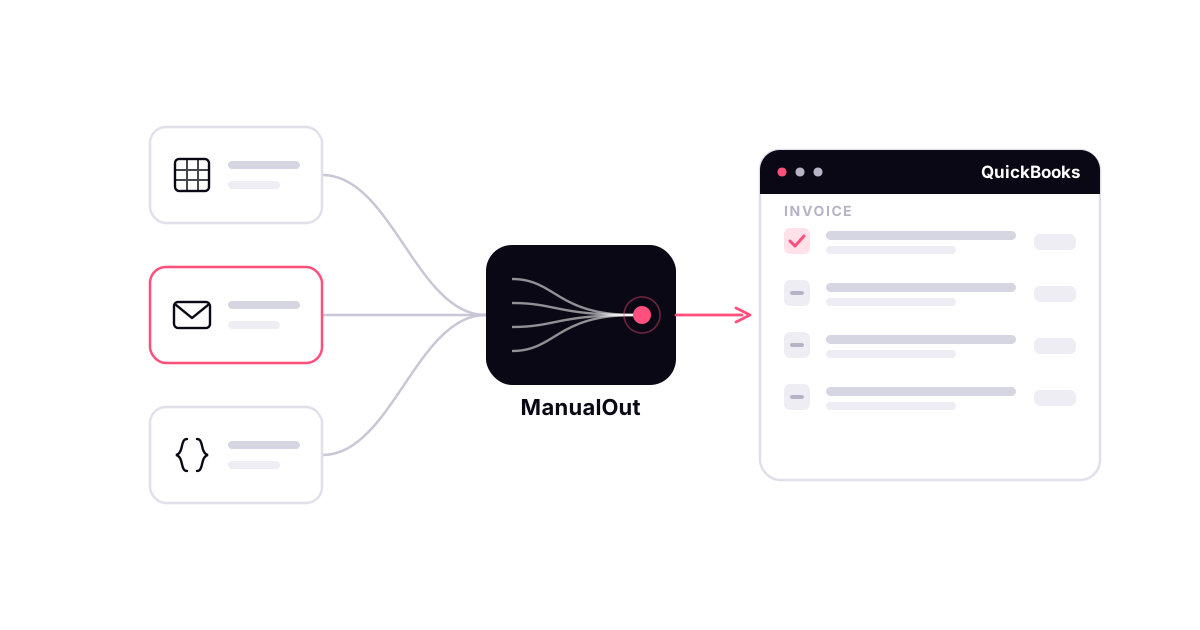
For a lot of distributors, QuickBooks is the whole back office — items, pricing, invoicing, reporting. The question is how well it handles order management, and the honest answer is: it depends on the edition, and on one gap that is the same across all of them.
What QuickBooks does well
For small and mid-sized distributors, QuickBooks covers the essentials: an Item list with units and price levels, customer records, and — on Desktop Enterprise and Premier — a true Sales Order transaction, with Advanced Inventory for multiple warehouses. It is capable enough that many distributors never outgrow it, which is exactly why the order desk keeps running on it.
Where the edition matters
The important split is the sales order. QuickBooks Desktop Enterprise and Premier have one; QuickBooks Online does not, and works through estimates and invoices instead. If you are comparing how to structure order management, that difference decides a lot — so name your edition before choosing tools or workflows around it.
The gap in every edition: intake
Whatever edition you run, QuickBooks does not read the orders your customers actually send. Those arrive as email bodies, PDF purchase orders and spreadsheets — and someone has to read each one, match it to the Item list, and create the transaction. That intake step is where order management on QuickBooks quietly turns back into manual data entry.
Closing the gap with automation
The fix is not to replace QuickBooks; it is to automate the intake in front of it. An order-intake layer reads each incoming order, matches the lines to your Item list and pricing, and creates the right transaction — a sales order in Desktop, an estimate or invoice in Online. That is what ManualOut does for QuickBooks order entry automation, with a person reviewing anything it cannot resolve. The step-by-step is in how to automate order entry in QuickBooks.
What to keep in-house
Keep QuickBooks as your system of record and keep judgement with your team. Automation should handle the reading, matching and typing, and hand your desk the exceptions — not make pricing or credit decisions on its own. If you are weighing this against other options, choosing order automation that fits your ERP covers what to test, or book a demo to try it on your own orders.
QuickBooks and Intuit are trademarks of Intuit Inc. ManualOut is an independent product and is not affiliated with or endorsed by Intuit Inc.
Frequently asked questions
Is QuickBooks good for order management?
QuickBooks handles items, pricing, invoicing and, on Desktop, sales orders well for small and mid-sized distributors. Its gap is order intake: it does not read the email, PDF and spreadsheet orders customers actually send, so that step stays manual unless you add automation in front of it.
What is the difference between QuickBooks Online and Desktop for orders?
QuickBooks Desktop Enterprise and Premier have a true Sales Order transaction; QuickBooks Online does not, and uses estimates and invoices instead. Desktop with Advanced Inventory also handles multiple warehouses. The right order-management approach depends on which you run.
How do distributors automate customer order processing in QuickBooks?
By putting an order-intake layer in front of QuickBooks that reads incoming orders from every channel, matches lines to the Item list, applies pricing, and creates the transaction — with a person reviewing exceptions. QuickBooks remains the system of record.