How to Automate Order Entry in QuickBooks (Online and Desktop)
A practical guide to QuickBooks order entry automation — how to turn email, PDF and spreadsheet orders into QuickBooks transactions without rekeying, on Online and Desktop.
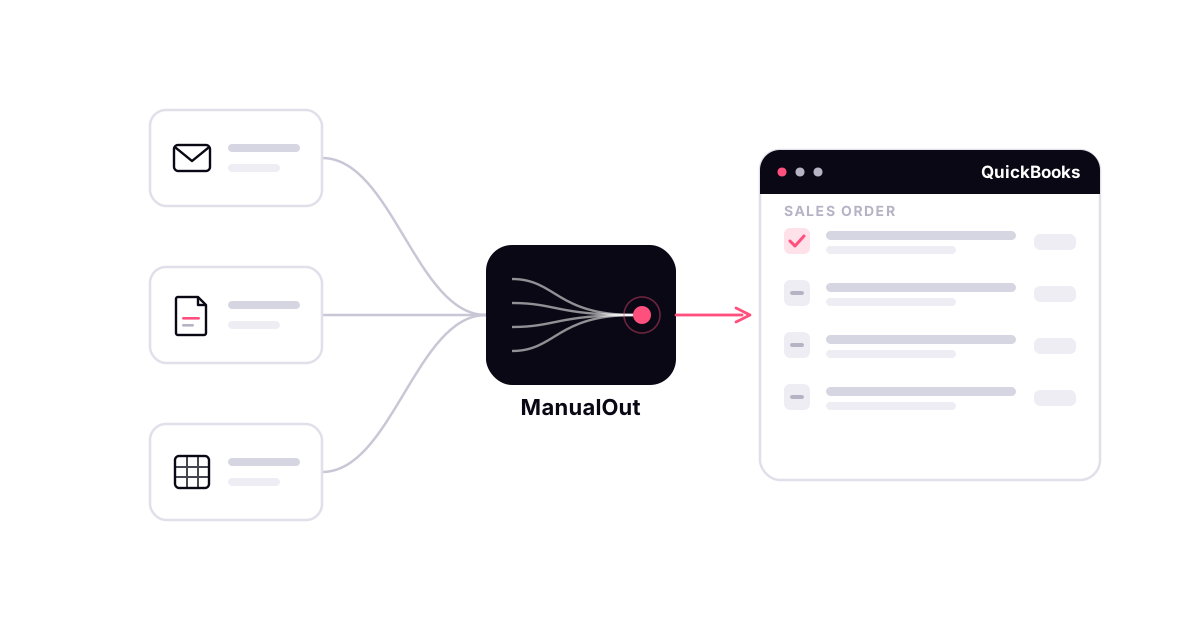
QuickBooks runs the books for a huge share of small and mid-sized distributors — but it still waits for someone to type each customer order in. Orders arrive as email, PDFs and spreadsheets, and a person reads them, matches every line to the Item list, and creates the transaction by hand. This is a practical guide to automating that work on both QuickBooks Online and QuickBooks Desktop.
First, know which QuickBooks you run
The single most important detail for order entry is the transaction itself, and it differs by edition. QuickBooks Desktop Enterprise and Premier have a true Sales Order. QuickBooks Online has no native sales-order transaction — orders become the estimate or invoice you already use. Any automation has to map to the edition you actually run, so establish that first.
What "automating order entry" means here
There is no setting inside QuickBooks that reads an emailed PDF for you. Automation means adding an order-intake layer in front of QuickBooks: software that reads the incoming order, does the matching a person would do, and creates the right transaction. QuickBooks keeps doing inventory, invoicing and accounting; the intake layer removes the typing. ManualOut's QuickBooks order entry automation works exactly this way.
The steps an intake layer handles
A capable intake layer covers the same ground your order desk does: it captures the order from whatever channel it arrived on, extracts the customer, PO number, items, quantities and units, matches each line to your QuickBooks Item list, and applies the customer's price level, class or location. What it produces is a transaction ready for QuickBooks — a sales order in Desktop, or an estimate or invoice in Online.
How it connects
QuickBooks Online connects through Intuit's API; QuickBooks Desktop connects through the Web Connector. You do not need a certified marketplace app to benefit — what matters is that the intake layer maps to your Item list, units and pricing so the transaction it creates is one QuickBooks accepts cleanly.
Keep a person on the exceptions
Automation is only useful if you can trust what reaches your books. The right model is human-in-the-loop: clean, confidently matched orders are created automatically, and anything ambiguous — an unfamiliar item, a customer code with no match, a quantity that looks wrong — is flagged for review. Your team approves exceptions instead of typing every order.
How to start
Start with one channel — usually the shared order inbox — and a sample of real orders. Run them through the intake layer and compare what it prepares against what your team would have keyed. If it matches, widen it channel by channel. To see it on your own orders, book a demo. For the bigger picture, read QuickBooks order management for distributors.
QuickBooks and Intuit are trademarks of Intuit Inc. ManualOut is an independent product and is not affiliated with or endorsed by Intuit Inc.
Frequently asked questions
Can you automate order entry in QuickBooks?
Not with QuickBooks alone — it waits for someone to key the order in. You automate it by adding an order-intake layer in front of QuickBooks that reads the incoming order, matches each line to your Item list, applies the customer's pricing, and creates the transaction. QuickBooks stays your system of record.
Does QuickBooks Online have sales orders?
No. QuickBooks Online has no native sales-order transaction, so orders become the estimate or invoice you already use. QuickBooks Desktop Enterprise and Premier do have a true sales order. Automation should map to whichever edition you run.
How does automated order entry reduce errors?
Because items, units, quantities and prices are matched to your QuickBooks records instead of retyped from a PDF or email. The order is checked before it becomes a transaction, and anything uncertain is flagged for a person rather than guessed.